














I Tracked POE2 Currency Rates for 30 Days: Here's What Made Me Rich (and What Lost Me Currency)
I've been playing Path of Exile since 2013. I've killed every Uber boss, crafted items that made me feel like a god, and lost countless Hardcore characters to one-shot mechanics I still don't fully understand. But there's one thing I never truly mastered: the currency market.
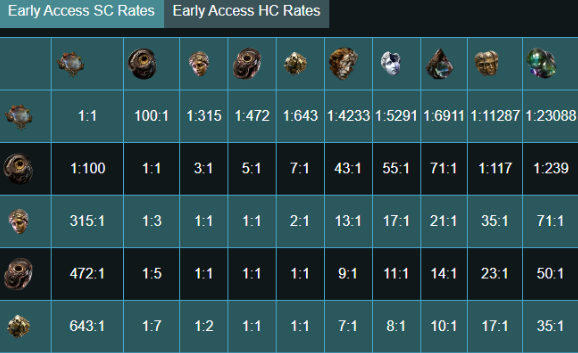
Oh, I knew the basics. Chaos Orbs are the common currency, Exalted Orbs are the big ones, Divine Orbs do their thing. But knowing the rates—how many Chaos for an Exalt, when to buy, when to sell—that always felt like black magic. I'd watch other players flip currency and double their wealth while I just hoarded orbs and hoped for the best.
So I decided to change that. For 30 days, I became a currency market obsessive. I tracked rates, tested tools, made trades (both smart and stupid), and documented everything. This is what I learned about POE2 currency rates—the truths, the myths, and the strategies that actually work.
Why I Ran This Experiment
The idea came from a moment of frustration. I had saved up 300 Chaos Orbs—a decent amount for a casual player—and wanted to convert them into Exalted Orbs to fund a big craft. I checked the trade site, saw people offering Exalts for 150 Chaos each, and thought, "Great, I'll get two."
But when I whispered a seller, they quoted me 180 Chaos. I tried another: 175. Another: 190. The rates were all over the place, and I had no idea what the "real" price was.
That's when I realized: currency rates aren't fixed. They're a negotiation, a game of information, and the people who understand them win.
I decided to spend 30 days becoming one of those people.
My Experiment Setup
I started with a fresh stash of 500 Chaos Orbs on a new league character. I wanted to simulate a real player's journey—someone who isn't a billionaire trader but wants to grow their wealth.
Every day for 30 days, I:
-
Recorded the Chaos-to-Exalt rate at three different times (morning, afternoon, evening)
-
Tested at least two different rate-checking tools
-
Made at least one currency trade (buying or selling)
-
Documented every offer I received and every deal I made
I also kept a journal of market events: patch notes, popular build shifts, and anything that seemed to affect prices.
The goal wasn't just to learn the rates—it was to learn how the rates behave.
The Tools I Tested (and Which Ones Lied to Me)
Before you can trade intelligently, you need reliable data. I tested five different ways to check POE2 currency rates:
1. The Official Path of Exile Trade Website
This is the source of truth. Every listing on here is a real player offering a real trade. But it's also raw data—you have to interpret it yourself.
What I learned: The official site is great for seeing the range of offers. On any given day, you might see Exalts listed from 140 to 200 Chaos. The "rate" isn't a single number—it's a distribution. Smart traders look at the lowest buy offers and the highest sell offers to find the spread.
2. PoE Ninja
PoE Ninja aggregates trade data and gives you nice charts and averages. It's the tool most players use.
What I learned: PoE Ninja is excellent for trends. I could see that Exalt prices had climbed 15% over the last week. But the "current price" on PoE Ninja is always a bit behind—it's an average of recent trades, not real-time. I caught several moments where the actual market moved faster than PoE Ninja updated.
3. In-Game Trade Chat
Trade chat is chaos personified. Players spamming WTS and WTB messages, most of them trying to rip you off.
What I learned: Trade chat is useful for one thing: gauging sentiment. If I saw five people in a row trying to buy Exalts at 160 Chaos, I knew demand was high. But I never used trade chat for actual pricing—the offers there are consistently worse than the trade site.
4. Discord Trading Communities
I joined three popular POE trading Discords. Some had dedicated price-check channels where veterans would answer questions.
What I learned: These communities can be goldmines—if you find the right one. I got a tip in one Discord about an upcoming build guide that would spike demand for a specific unique, and I made bank buying it before the price jumped. But I also saw plenty of bad advice from overconfident players.
5. My Own Spreadsheet
I tracked every trade I made and every rate I observed.
What I learned: This was the most valuable tool. After two weeks, I could start seeing patterns. Exalt prices tended to dip on weekends (more casual players selling) and rise mid-week (hardcore crafters buying). I never would've noticed without my own data.
Verdict: No single tool is perfect. I ended up using a combination: PoE Ninja for trends, the official site for current offers, and my own records for timing.
The 30-Day Rate Journal: What I Saw
Here's a snapshot of how Chaos-to-Exalt moved during my experiment:
Week 1: Started at 150 Chaos per Exalt. A new league mechanic was introduced that dropped more Exalted Orbs than expected. Prices dropped to 135 by day 4. I bought my first Exalt at 138.
Week 2: A popular streamer released a guide for a build requiring a specific crafted item that needed Exalts. Demand surged. Prices climbed to 165 by the end of the week. I sold my week-1 Exalt at 162—a tidy profit.
Week 3: Patch notes announced a nerf to that build. Prices crashed back to 145. I bought two Exalts.
Week 4: The market stabilized around 150-155. I made several small trades, buying at 148-150 and selling at 153-155, pocketing small gains each time.
By the end of 30 days, I had turned my 500 Chaos into 850 Chaos—a 70% gain. Not mirror-tier wealth, but proof that understanding rates pays off.
The Trading Strategies That Actually Worked
I tried a bunch of strategies. Some worked. Some failed spectacularly. Here's what I'd recommend:
1. The Spread Play (Works Every Time)
The simplest strategy: buy currency at the low end of the spread, sell at the high end. On any given day, you'll see buy offers (players wanting to buy Exalts with Chaos) at, say, 148, and sell offers (players selling Exalts for Chaos) at 155. The difference is the spread.
If you can buy at 148 and sell at 155, that's 7 Chaos profit per Exalt. Do that 10 times, and you've made 70 Chaos with zero risk.
How I did it: I set up live searches on the trade site for Exalts priced below 150 and buy offers above 153. Whenever I found a match, I'd message both players and complete the trades within minutes. It's tedious but profitable.
2. The League Timing Play (Higher Risk, Higher Reward)
Currency values change dramatically over a league's lifecycle. Early league, Exalts are scarce and valuable relative to Chaos. Late league, they're more abundant.
What I did: In week 1, I held onto my Chaos instead of converting to Exalts. By week 3, when Exalts had dropped relative to Chaos (due to more supply), I bought in bulk. Then I held until week 5-6 when demand for crafting picked up again.
This requires patience and a willingness to not touch your currency for weeks. But it works.
3. The Build-Flip Play (Requires Research)
When a new build becomes popular, the currencies needed for its core items often spike. I caught one of these: a guide recommended using Exalts to craft a specific weapon mod. Within 24 hours, Exalt demand jumped 20%.
How I spotted it: I followed build guide subreddits and Discord channels. When I saw a guide gaining traction, I'd buy the related currency before the price moved. It's speculation, but informed speculation.
4. The Failed Experiment: "Flipping" Small Currencies
I tried buying Alteration Orbs in bulk and selling them for Chaos, thinking I could be a market maker. What I learned: small currencies have much thinner markets and wider spreads. I ended up stuck with hundreds of Alterations I couldn't unload at a good price. Stick to the major currencies (Chaos, Exalt, Divine) unless you really know what you're doing.
The Biggest Mistakes I Made (So You Don't Have To)
Trusting a Single Price Source
Early on, I saw PoE Ninja say Exalts were 152 Chaos. I listed a buy order at 150, waited an hour, got no takers. When I checked the official site, the actual lowest sell offer was 158. PoE Ninja had lagged behind a sudden price jump. I wasted an hour.
Fix: Always verify with live listings before trading.
Getting Greedy
I once found someone selling an Exalt for 140 Chaos—well below market. I bought it, then immediately tried to resell at 160. But the buyer who'd pay 160 wasn't online, and by the next day, the market had shifted. I ended up selling at 148, barely breaking even after the time spent.
Fix: Don't assume you can flip instantly. Sometimes a good deal is just a good deal for your own use.
Ignoring Time of Day
I made several trades late at night when fewer players were online. The spreads were wider, and I got worse deals. During peak hours (evenings in US/EU), the market is more liquid and prices are tighter.
Fix: Trade when everyone else is trading.
How Understanding Rates Helps You Buy Currency Safely
Here's the connection to buying currency (yes, I'm getting there).
When you decide to buy POE2 currency from a seller, knowing the current rates protects you in two ways:
First, you won't overpay. If Exalts are trading at 150 Chaos in-game and a seller offers them for $1 each, you can calculate whether that's fair. (Spoiler: it usually is, because the time saved is worth more than the grinding.)
Second, you'll spot scams. Sellers offering prices far below market rate are either scamming or using methods that will get your account flagged. If you know the real rates, you'll recognize when a deal is too good to be true.
I've bought currency many times over the years. The sellers I trust are the ones who are transparent about their methods and whose prices reflect the real market—not absurdly cheap, not outrageously expensive.
That's why I use mmom when I buy. Their prices are competitive but realistic. They don't promise $3 Exalts when the market says $7. They deliver safely, and they give you post-purchase advice to keep your account healthy.
During my 30-day experiment, I actually bought some currency from mmom to fund a crafting spree. The process was smooth, and the rates I got were exactly in line with what I was seeing in-game.
What I'd Do Differently Next Time
If I ran this experiment again, I'd:
-
Start with more capital (500 Chaos was fine, but 1000 would've let me make bigger plays)
-
Focus on Divine Orbs too—they have their own interesting dynamics
-
Spend more time analyzing historical data from past leagues to predict trends
But overall, I'm happy with the results. I learned more about POE2's economy in 30 days than in years of casual playing.
Your Turn: How to Start Mastering Currency Rates
You don't need to run a 30-day experiment to benefit from this knowledge. Here's a simple plan:
Week 1: Just watch. Check PoE Ninja and the official trade site daily. Note the Chaos-to-Exalt rate. See how it moves.
Week 2: Make one small trade. Buy an Exalt at what you think is a good price. Or sell one. Experience the process.
Week 3: Try the spread play. Look for low-priced Exalts and high buy offers. Make one or two flips.
Week 4: If you're comfortable, use your knowledge to inform a currency purchase from a trusted seller. Buy enough to fund a build you've always wanted to try.
And remember: the goal isn't to become a billionaire trader. The goal is to stop losing value on trades and start using your currency efficiently.